I've been thinking about some of the comments in reaction to Stacey's excellent recent post, "Working at Philosophy, Part 2 – That Time I Considered Quitting Philosophy." The relevant comments are:
This post feels like my own autobiography. - pbj | 02/08/2016 at 03:50 AM
Graduate school and the academic job market, especially philosophy, are extremely hard and competitive. There is never such a thing as 'good enough'. It is inevitable that such a work environment breads anxiety and depression. Really, for a lot of people, academia is not psychologically healthy. Even after all these years, I still struggle to put negative thoughts in check. I even remember talking to tenured professors who confessed to struggling with anxiety and depression…Your experiences are not unique Stacey, as you of course now know. – Pendaran Roberts | 02/08/2016 at 04:15 AM
Studenthood, especially at the graduate level, is inherently unsettling because it requires continual exposure to one's own areas of ignorance. While in that role, it can feel as though one's life and one's very self are being gradually torn down. Ironically, this is a cumulative byproduct of extended learning. Think of ignorance as large dark wall and knowledge as a light shining on it. As the area of the light grows larger, more it comes into contact with the vast darkness. In other words, the more you know, the more you know you don't know…The problem with academe, especially grad programs, is that they represent a culture that has is very good at challenging students to face their areas of ignorance, but not at helping students to develop confidence in their unique knowledge, skills and professional self-esteem. Look at the way the departmental pecking orders play out with ego wars among faculty recruiting unwitting grad students as their pawns and the primary mode of attack being one of convincing others how much smarter they are than anyone else. - Larry Cesare | 02/08/2016 at 12:19 PM
I think it's really sad that rampant physical or mental illness or the worsening of these illnesses is supposed to be "normal" just because one is in graduate school. While I'm sure it's fair to ask students to go to therapy or take medication, I also wonder whether we should restructure our programs such that these very serious things are prevented from ever entering students' experiences. It's difficult for me to believe that these illnesses are simply the byproducts of exposing oneself to one's own ignorance. That's not how it seemed to me, at least! – Paula | 02/08/2016 at 01:19 PM
Stacey's post feels a bit like my autobiography as well. I feel like I've been stressed out for, oh, about the past 15+ years or so–and no, I'm not exaggerating. I was stressed out in grad school, was even more stressed out on the job-market, and am still (a bit less) stressed now. As the above comments suggest, I don't think this makes me weak or "weird." I think it just makes me human. Anyway, Stacey's post and the above comments raise many important issues–among them:
- Are graduate school, and academia more broadly, inherently bad for psychological well-being?
- What can programs, our discipline, and academy more broadly do to better support good psychological well-being?
- What can individuals (e.g. grad students, faculty, etc.) do to grapple effectively with the psychological pressures, etc., of academic life?
Although many of these issues have been discussed elsewhere, they seem to me to be such important issues that I think it could be helpful to openly discuss them here at the Cocoon. I suppose I will simply share some of my (admittedly anecdotal) thoughts, and then open things up for discussion.
Some thoughts on question 1 (are graduate school, and academia, inherently hard on psychological well-being?): Obviously, these are empirical issues. However, a recent study indicates that, "40% of graduate students reported feeling hopeless during the previous year, 78.5% said they had felt overwhelmed, 27.2% said they had felt depressed, and 54.5% said they had felt stress over the past year ranging from “more than average” to “tremendous.”" (Science, my emphases)–and my own personal experience is that academia more generally is very stressful in all kinds of ways.
Could graduate programs be restructured, as "Paula" suggests, to ensure that "these very serious things are prevented from ever entering students' experiences"? My personal experience here is mixed. On the one hand, I know someone in an incredibly supportive program with excellent mentoring in another field–and my experience is that this program's supportive mentoring environment indeed helps a bit. By and large, its grad students seem to have "very good morale." They recognize that they are well-mentored, and tend to publish successfully, complete the program, and do well on the job market. At the same time, I have still seen students in that program encounter the same kinds of struggles with psychological well-being that students in other programs face. I have literally seen students in that program transform before my eyes from confident, happy people to grad students wracked with self-doubt, worry, etc. And yes, the problem seems to me to be academia itself. The "academic game" seems systematically rigged to generate things like worry and self-doubt. No matter how supportive one's program is, the fact is, one must "publish or perish", and that there are precious few academic jobs. These, and other features of academia (repeated journal rejections, getting "scooped" by rival researchers, etc.), are all recipes for stress.
Some thoughts on question 2 (what can programs, etc., can do to improve things?): I am not sure how academia might feasibly be reformed to become less stressful (any ideas?). However, I do have some ideas about how grad programs might help. Although my experience with grad programs is admittedly anecdotal, my (anecdotal) experience suggests that the following features of programs may be helpful:
- A general openness to grad student concerns: At some programs, I've seen students afraid to approach faculty with "personal" (i.e. well-being) issues. At other programs, I've seen students be much more comfortable approaching faculty for mentorship on handling stresses. Note that I didn't say "counseling" here. I don't think it's the job of faculty to "counsel" students psychologically, as that is not our expertise. What we do have experience in, however, is grappling with academic demands (i.e. publishing, etc.)–the kinds of things that give rise to psychological stresses. My experience has been that the less afraid students are of approaching faculty with concerns (viz. "I'm struggling with publishing"), the better–as faculty can then provide professional guidance that the student can then use to avoid/grapple effectively with stresses. Which brings me to,
- Serious commitment to good, positive mentoring at every step of the development process: The programs I have seen where grad students fare best are those programs where graduate advisors are officially established early on (i.e. the very first year), and whose advisors take a positive "hands-on" approach to mentoring students at every stage of development–helping their students learn how to publish, develop thesis/dissertation ideas, etc. Conversely, I have seen two types of graduate school situations that seem to me to be harmful to grad student well-being and development: (A) negative "hands-on" programs (programs which aggressively aim to pit grad students against one another in competition), and (B) "hands-off" programs that expect students to "figure it out alone" at different stages of development (leaving students to flounder with publishing, developing good dissertation ideas, etc.)
- Good completion times and completion rates: The programs with the best grad student morale that I have encountered are also programs whose students generally (A) finish the program, and (B) finish relatively quickly (i.e. in 5-6 years on average). Although this, again, is just my experience, the experience has been really striking. I've seen grad students who know they will finish quickly be really optimistic–as they see their program producing graduates efficiently. Conversely, the programs that I have encountered with the worst morale are those whose students regularly take 7-10+ years to complete the program.
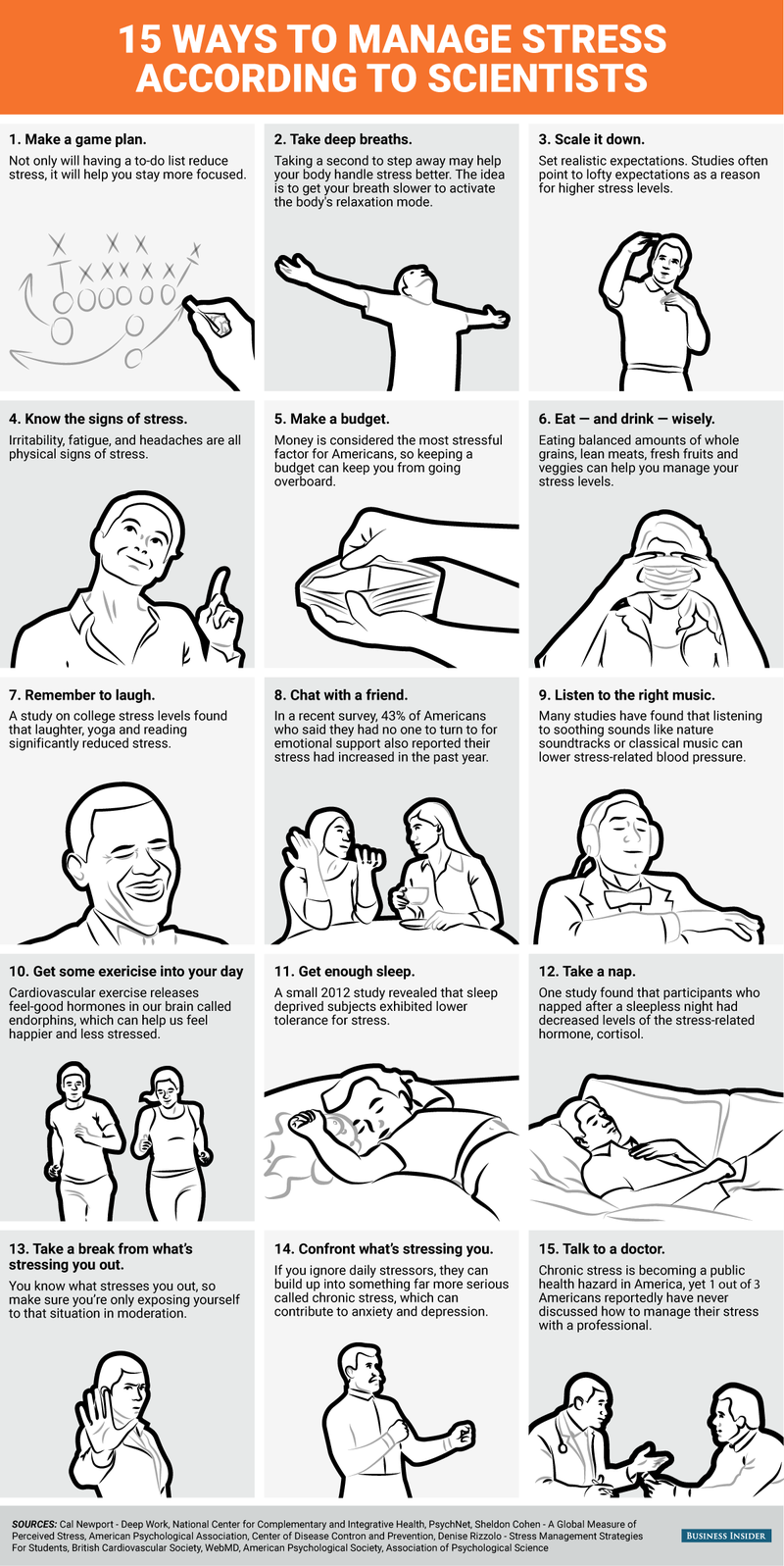
Finally, here are a few thoughts on question (3) (what can we do, as individuals, to grapple effectively with stresses?):
- Mindfulness: Although I do not specialize in psychology, my wife does–and she tells me that the empirical research on "mindfulness" is quite overwhelming: mindfulness really works. And indeed, I took part in a mindfulness workshop in her department, and my experience was that it works wonders.
- Work/life boundaries: I have also found it incredibly helpful to set firm boundaries on "work time" and "personal time." Early in my career, I worked day and night. But, after I got married, I felt I owed it to my spouse to do otherwise–to set aside time for her. So, I set the following work hours: Monday through Friday, 9am-5pm, and no work in the evenings or weekends. Much to my surprise, I found myself getting more work done this way than before. Somehow, it made me more efficient (I suspect it is partly because daily "time off" gives one time to recuperate mentally, from day to day).
- Walks. A small thing, but there's empirical literature on the positive effects of walks–and I found they are helpful, even when (particularly when) one is feeling down.
- Non-procrastination: My own experience is that procrastination is one of the worst things for my well-being, as there are few things worse than feeling "in a hole" (viz. "I need to publish!") and not taking actions necessary for getting out of that hole. Fortunately, there is an emerging literature on how to avoid procrastination–and my experience fits well with some of it in particular: namely, that procrastination can be avoided by consistent, structured routines (e.g. making oneself write X number of pages every…single…day).
Anyway, these are just some of my thoughts. What are yours?
- Is your experience that grad school and/or academia is inherently hard on well-being?
- If so, what do you think could be/should be done?
- Are there things that your grad program did/does that either helped, or undermined, grad student well-being?
- And, have you found helpful ways of grappling with academia's stresses? If so, what are they?
I realize these are a lot of questions. However, given how many people appear to experience difficulties with stress and well-being, my hope is to simply get a conversation started on these important issues and see where it goes!
Leave a Reply to Pendaran RobertsCancel reply