A couple of discussions the past few weeks got me thinking about the role that service (to one's department, university, the profession, etc.) plays on the job market. First, a little over two weeks ago, Daily Nous hosted a discussion on whether graduate students should receive compensation for service work. Second, around the same time, a colleague in the discipline at a research university mentioned on social media that they actively discourage their grad students from engaging in service, the rationale being, if I recall, that it's just not worth grad students' time and energy. I weighed in on this discussion, saying that my experience working and hiring on four search committees at a liberal arts university is very different: namely, that service may substantially benefit candidates on the market for jobs at universities like mine. 

Anyway, both of these discussions got met thinking: do search committee members, and search committees as a whole, care about service? Do candidates' service records affect how they are evaluated by search committee members? If so, how?

Because these seem to me to be important issues, I decided to run an informal poll asking search committee members to weigh in on a few questions. To be clear, it is just an informal poll with a relatively small sample size (N = 29), not a formal study–so the results should be presumably taken with a serious grain of salt. However, here are the results:

  • Number of respondents: 29
  • # self-reporting as from R1 research universities: 18
  • # self-reporting as from regional state universities: 4
  • # self-reporting as from non-elite liberal arts universities: 3
  • # self-reporting as from elite liberal arts universities: 1
  • # self-reporting as from community colleges: 1
  • # self-reporting as from 'other': 2

Q1 – A job-candidate's service record (viz. service to their department, university, community, etc.) can play a real role in how I personally evaluate their candidacy as a search-committee member:
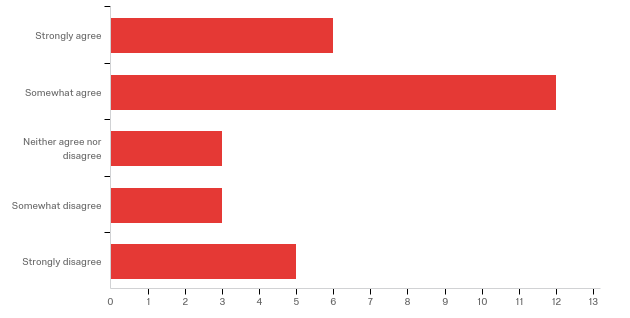
Q1

Q2 – The search committee(s) I have been on have taken candidates' service records (viz. service to their department, university, community, etc.) into account in their collective deliberations on who to interview or hire:
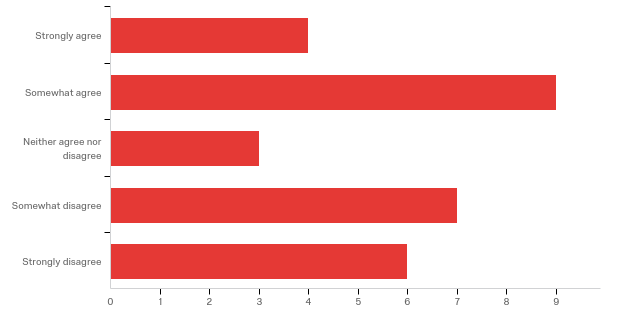
Q2

Q3 – Depending on your answers to Q1 & Q2, what kind(s) of service may play a role in how candidates are evaluated?:

All responses, complete and unedited:

  • "Diversity related service, public philosophy, service that brings in media attention, service that attracts grads to the department, undergrads to classes or the major."
  • "All forms, but especially technology, diversity, and proactive, positive contributions to the profession."
  • "Course development, curriculum reform, labour organizing, establishing MAP chapters, etc."
  • "Student outreach, diversity initiatives, reading and discussion groups, syllabus reform."
  • "Service with students."
  • "Anything that indicates that they would be a responsible member of my department–graduate representative, serving on committees, organizing events, etc."
  • "In a UK context, it really is a must. You need to be able to show some "admin" experience, e.g., being part of committees, taking on admin roles in your department."
  • "Has the candidate been involved in any diversity initiatives on campus, or leadership/shared governance roles. At my institution we need people to do a lot of service because we are badly understaffed, and we also need people who can help with diversity, equity, and inclusion efforts."
  • "Undergraduate mentoring; teacher training related initiatives; diversity related initiatives (e.g. MAP chapter)."
  • "It's not so much that kinds of service matter, but when debating candidates with differing research outputs, variations in teaching and administrative loads become relevant to predicting future performance."
  • "Anything that indicates that the candidate is a team player."
  • "Stuff that shows experience working with grad students, stuff that shows they would be a leader in enriching our intellectual community."
  • "I don't care about journal refereeing. I take an absence of departmental service, or only insubstantial-looking service lines on the CV, as something of a red flag; it suggests to me that the candidate won't pull their weight in the department. Larger professional service roles suggest the candidate is becoming connected, which is a weak positive sign of reputation-building (which can matter for tenure)."
  • "Work that showed a serious commitment to various kinds of diversity (running a MAP chapter, teaching philosophy in urban schools, etc)."
  • "I was not allowed to officially consider any service, only the vague 'capacity' to take on roles within the department. This is a serious issue, and I wish that I could take into account junior colleagues that have undertaken senior roles (perhaps to the detriment of their research outputs). If able to, evidence of taking on important departmental roles would be great to ensure that we are hiring someone that can cope in those roles (i.e. future chairs of departments!)."
  • "Primarily we have looked at administrative experience–has this person served as a chair, been in charge of adjuncts, performed class scheduling, served as an advisor."
  • "Founding/running undergraduate clubs, recruitment efforts (with data to show their personal involvement), conference volunteer work, tutoring/mentoring students in an official capacity."
  • "Philosophy club, public philosophy, pedagogical committees."
  • "None."

Q4- I answered the above questions on the basis of my experience serving on search committee(s) at:
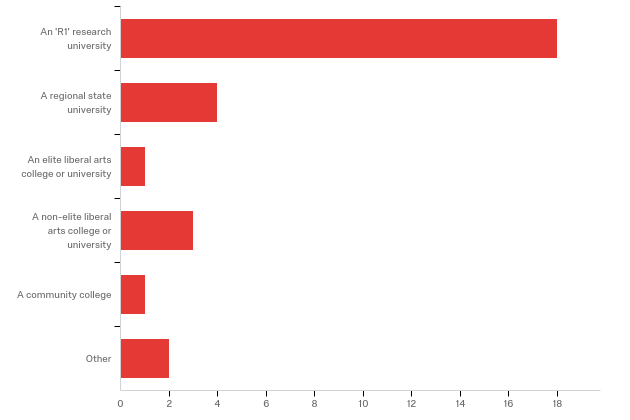
Q4

Again, this is just an informal survey–but I for one find the results intriguing, especially the qualitative answers to Q3 (indicating the kinds of service respondents care about, and their reasons for doing so). Anyway, I hope you all find this information helpful, and would be curious indeed to see what a more formal study might find!

Posted in , , ,

11 responses to “Poll results: service and the market”

  1. a nervous wreck of course

    There’s either a Simpson’s paradox or a Lake Wobegone effect at work here, as revealed in the discrepancy between answers to Q1 and Q2. Which one you think more likely, I bet, has to do with how high your cynicism idles….

  2. NTT defender

    I have an argument related to this and a question.
    First, the argument. These results suggest that, at least for some search committee members, service work improves their view of a candidate. In turn, this means that a lack of service work harms their view of other candidates, since job searches are a zero-sum game. If this is true, I think search committee members should be critical of their attitudes. I will use myself as an example. I am a temporary NTT faculty member. I have been for several years. This means that I am paid somewhere between 50 and 75 percent of what TT faculty members in my department are paid, and I teach a higher teaching load. Additionally, I must be on the job market every year, lest I become unemployed and starve to death next year. Because these posistions are temporary, I have no stake in improving student opportunities for out-of-class activities, improving diversity of the department, or improving the long-term state of the department and university, in general. Furthermore, it is unfair to expect me to take an interest in these things, given the tenuous and low-paying nature of my positions. In fact, my job offers have all stated that I am expected to take part in no service work, implicitly because I am paid less than TT members and my position is temporary. The fact that I don’t, for example, start a MAP chapter at my institution says nothing significant about how I would serve my university and department, were I to be in a permanent position. This is evident by the fact that several years ago, as a grad student, I served my department in several ways, when I was a more permanent fixture somewhere. Thus, I think that search committee members should take into account the nature of NTT work when assessing candidates’ past service, if candidates have worked only temporary positions. Maybe they already do, but I am doubtful, since many TT facutly have no idea what it is like to work in a NTT position.
    Second, the question. Given my background described above, do you think it is advisable, inadvisable, or neither to acknowledge the fact that I haven’t done any major department service in the past few years, but I did several things (like organize a conference, volunteer with a university student mentoring group) when I was a graduate student? Or should I just talk about the things I did as a grad student without acknowledging the fact that I haven’t done much recently? Thanks, in advance!

  3. Amanda

    NTT defender – it sucks that you are in the position you are in. But you just gave a good example of the mistake that I’ve seen many job market persons give before. You say that “it is not fair” that search committees do this. You explain all the understandable reasons that you are not invested in service.
    The problem with this line of thinking, is it assumes the job market is some “merit” market. As though the point is to give a reward to the most objectively meritorious candidate. That is not how it works. It is the job of the search committee not to meritoriously evaluate the candidates on an objective scale that takes into account different hardships, it is the job of the search committee to find the candidate that will best benefit their department. That is the entire point: who, out of all of these immensely overqualified people we have in our pile, who is going to help our department the most? Whether or not you had good reasons for not doing service isn’t too relevant. I guess it might be relevant in so far as search committees might think – “well, they didn’t do service, but they could have had good reasons, so maybe they will do it when hired. ” The problem with that, is search committees have other candidates who aren’t maybes. They are candidates who have proven their commitment to service, and they are candidates, very often, who are in a similar position to you. So given these options, search committees will take a safer bet.
    To be clear, search committees have a legal and moral obligation to not discriminate or do anything illegal in their evaluating. But other than that, their job is to help their department. Even if it wasn’t. it would be just damn impossible to judge the merit of candidates according to situations like contract positions and lack of appreciation in their NTT job. We just don’t have the information to know who , amongst so many people who clearly have it rough, have had it the roughest. We don’t know who has to manage with the jerk boss or the kid with an illness or whatever. We just can’t evaluate merit in this sense, and we typically aren’t trying to in the first
    place.
    To your question: I would mention the service you did in grad school and just not say anything about not having done it recently. I think there is no way to bring that up that will not highlight it in a bad way, or sound like excuse making. Yes, that might not be fair, but my advice is aimed at being real, not ideal.
    Anyway, one thing I find interesting about this survey, is it seems a decent number of R1 departments care about service, not just teaching schools. This goes to what I have said before: this false vision of the best candidate being equivalent to the person with the most publications in the highest ranked journalists isn’t just false on the job market as a whole, it is false even with the R1 market .

  4. NTT Defender

    Hi Amanda. Thank you for your reply. My post did not suggest that I think that the job market is fair, nor that jobs are awarded on the basis of merit. Nor do I believe that. Given the fact that I have been on the job market many years, I would be delusional if I thought that. Of course, I believe that the job market should be fair, and I think, in most cases, jobs should be awarded on the basis of merit, where “merit” is understood as whatever combination of characteristics will best allow the person to fulfill the job requirements. My claim is that if search committees see a lack of service from people who have worked a series of temporary positions at different places as suggesting that they won’t do service, they might not be finding the people who are best suited for the position. It seems that you think that the job market shouldn’t be fair or that jobs should not be awarded to the candidates best suited for them. Or maybe you think that it is already fair–at least about assessing service. In either case, we disagree.
    Of course, I recognize that search committee members are not going to read a comment on a blog post at all, let alone read it and be convinced. So, in one sense, our argument here is irrelevant. So, whatever.
    I have also received opposite advice about bringing up lack of service. For example, one person told me to bring it up sneakily by saying something like “Since earning my Ph.D., my career has led me to a different university every year…” I think it might be one of those things where different people just have different reactions. There’s probably not a right way to talk about it or not talk about it.

  5. NTT Defender

    I also think some TT people subject NTT people like me to an trap argument in the following way. We are paid less than TT assistant professors. When we object, we are told “Ah yes, but you have no service or research requirements.” (In fact, I think I remember several people on this blog saying exactly this last month.) Then we go on the market, having not done research or service (just service in my case) at our NTT jobs, and we are told “Ah yes, but these other people in your position have done research and service.” Everyone recognizes that most people don’t want to permanently remain in NTT jobs. So, really, what some TT people are saying to us is, “You need to do things that benefit our department, despite the fact that you are paid less for it than TT assistant professors and your contract explicitly says you are not expected to do it.” And, in conversation, our bosses say things like, “We know you need to do the job market again this year. That’s why you don’t have to do service.” But now, we discover, that’s all bullshit.
    The more I think and talk about this, the more I absolutely hate the current state of academia. So, I will leave this thread now.

  6. R

    NTT Defender, I think in this particular respect things might not be quite as gloomy as you suggest. Given that service is generally regarded as less important than teaching and research, you can probably get by here on a “satisficing” approach rather than a “maximizing” one. I interpret the survey results as at least consistent with, if not supportive of, the view that it’s good to have some service on your record, and in marginal cases having no service record at all might make a difference, but exactly how much you’ve done after passing some minimal threshold doesn’t ever matter. As one of the respondents said, you just need to show you’re a team player. If you did that in grad school you don’t have to prove it again and again in subsequent jobs.

  7. Amanda

    I’ve said that the people in NTT positions who are still doing the job market really are in a rough position. When I say the no teaching and research positions, I am thinking of the permanent NTT positions where people do not need to be on the job market anymore.
    One thing that is rough about this shitty job market is it is “normal” to be in a permanent NTT position for several years. This is when you are indeed getting paid less and very pressured to work more than your responsibilities require. Everyone has to make their own decision about how long they are willing to do this before trying something else.
    One reason, among many others, that I really support the good NTT positions that treat and pay permanent NTTT people well (well, not perfect) is that I think these are jobs that people who have been on the market for a long time should look for in addition to NTT jobs. No I do not agree that “everyone recognizes that most people don’t want to remain in NTT jobs forever”. Well, if you mean, ideally, then sure, most people would pick a TT over a NTT, all things equal. But there are plenty of people who take NTT jobs that are designed to be permanent and that they accept expecting them to be permanent, because all things are never equal. Sam form the cocoon is an example of that. And I know 6 people at my own institution that are examples, and 2 at my old institution.
    I think if the profession afforded these permanent NTT jobs the respect that they afforded TT jobs, then many of them would look pretty damn attractive. But there is so much of a ONLY TT JOBS COUNT mindset that people will take a really shitty TT job in the middle of nowhere at a financial insecure school when they could have had a permanent NTT job that pays much more, with the same teaching load, and less responsibilities and with more security given the comparative finances of the schools in question.
    I think hiring committees, given the evidence available, should hire the person that will best benefit their department and their university. I think there is one definition of fair where that is fair, but that there are many different ways to use the word fair.
    What I think your point seemed to miss, is that search committees only have so much evidence. So sure, someone who didn’t do service might be best for the job, but how would a search committee member know this when service is important to them, and when there are a long list of other amazing candidates who DID do service? The search committee member could take a leap of hope and reason that someone probably had very good reasons to not do service, but they can’t know this. They can’t distinguish someone who didn’t do service for good reasons from someone who had bad reasons. Moreover, even if one had good reasons, that doesn’t help with the lack of experience. If the person who didn’t do service was vastly over qualified comparatively to the other candidates, then yes, it would make sense to choose them even without service. But given the competitiveness of the market, there almost always are comparative candidates who also have service, and that means they win by a few small steps in a very close race.

  8. Amanda

    “You need to do things that benefit our department, despite the fact that you are paid less for it than TT assistant professors and your contract explicitly says you are not expected to do it.”
    Many permanent non-TT faculty get paid the same amount as assistant and associate professors. They have different responsibilities, but get paid the same amount. From what i have seen, with the good permanent lecturer jobs, it is the full professor level where the pay difference comes in. Of course, there are a lot of crappy non-TT that don’t do that. And this is why I fight for the good ones. But it is important to remind people that some non-TT positions pay equal to assistant and associate professors, these are not exactly uncommon, although I wouldn’t say common either.
    Marcus as a VAP did you get paid the same as an assistant professor? I thought you said that, but maybe I was wrong.
    Anyway, suppose you are paid less. You don’t have to do service. In so far as I would give that above advice, it would be because I am stating the hard truth in a competitive market. The advice is conditional: “If you want to be as competitive as possible on the TT market, it probably makes sense to do some service even though you are paid less. ” I didn’t create this market. And everyone can decide for themselves if they think going through all of this is worth it. But the advice I give is always based on how the world is (at least as far as I know) not as it should be.
    As far as you getting different advice. Yeah. That is another shitty thing about this job market stuff. search committee members have different beliefs, and so consistent advice is hard to find, and a lot of it amounts to luck.

  9. Anon anon

    FWIW I filled out the survey, teach at an R1, and disagree with Amanda and am sympathetic to Ntt’s concerns. I tend to judge candidates holistically and think about their circumstances. For example, if someone is coming straight out of grad school, in particular a grad school that was cushy, I’d expect them to have done some service and show they know how to be a member of an academic community. Likewise for people in tenure track jobs. I certainly wouldn’t expect VAPs, adjuncts, etc to be doing service work. Many of them aren’t even allowed to if they want to.

  10. Marcus Arvan

    I partly agree with Anon anon, but also partly agree with Amanda. Like Anon anon, I evaluate candidates holistically, and wouldn’t hold lack of service against an adjunct. HOWEVER, when it comes to committee deliberations (in terms of who to interview, invite to campus, and hire), my sense is that committees tend to select whichever person they deem best for the position (which is what Amanda’s remark implies).

  11. Amanda

    Nothing I said speaks against judging a candidate holistically. Of course you should do that. And it is find to expect more of someone coming from a cushy position than a not cushy position. I would do that too. My examples were not of one person coming from a cushy position and having service work, and then an adjunct that didn’t. What I said was that there are going to be candidates that are coming from temporary positions who also DO have service work. So if two candidates come from temporary positions, and one has service work and the other doesn’t – in that case, whatever good reasons the latter had for not doing service work will not be that important. The other person, in the same position, (as far as the committee knows) did service work (work they didn’t have to do.) This experience benefits the candidate, and benefits the candidate’s future department.
    Also, “holding something against” a candidate is an odd way to put it. If I choose the adjunct with service work over the adjunct without service work, I don’t see this in terms of holding something against the unfavored candidate. It is rather I hold something in favor of the favored candidate. If I prefer one candidate because they published an amazing book their 2nd year out of grad school, this doesn’t mean I hold not publishing a book against all the others. I might think it is perfectly reasonable to not have published a book so early, and I might think some of those candidates could very well publish a great book 2 years down the road. But as search committee member, I prefer a safer bet, i.e. someone who already accomplished something amazing. The “holding something against someone” perspective, to me, again seems to paint this picture of search committee members seeking to give out awards to the candidate who has accomplished the most in their particular circumstances. Search committees are hiring colleagues to help their department, not giving out awards. Of course, what a candidate accomplished din their circumstances plays some role in hiring the best person for the department, but just not the only or ultimate role others seem to expect or hope.

Leave a Reply

Discover more from The Philosophers' Cocoon

Subscribe now to keep reading and get access to the full archive.

Continue reading